
Why Creating a 'Home' in Your Classroom is the Ultimate Engagement Hack
Jun 30, 2026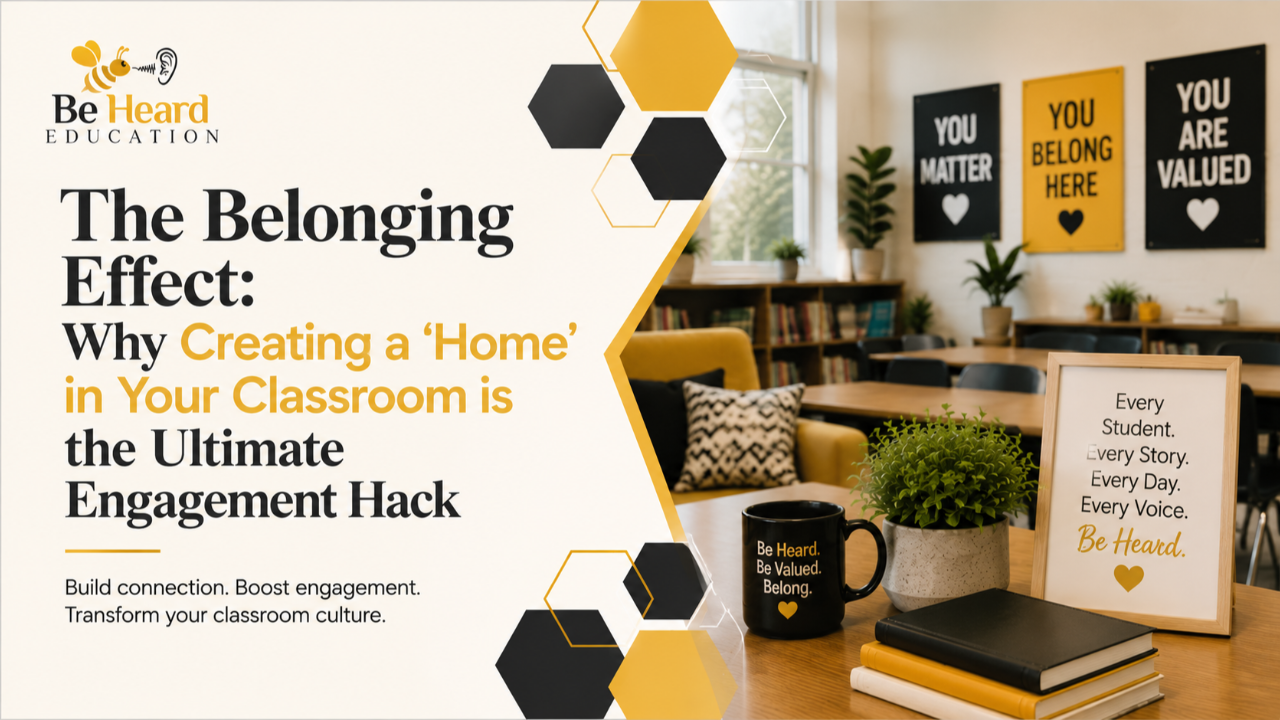
Before a student can master complex algebraic equations or analyze the themes of a classic novel, they must first answer a fundamental, internal question: Do I belong here?
At Be Heard Education, we believe that every student has a story that deserves to be heard and potential waiting to be unlocked. The answer to that belonging question is the difference between a student who merely occupies a desk and a student who actively engages with the curriculum. This is what we call The Belonging Effect, the transformative power of a supportive, inclusive classroom environment that functions less like an institution and more like a second home.
As educators, trainers, and leaders, we are tasked with more than just delivering content; we are architects of culture. By prioritizing SEL, Social and Emotional Learning, and fostering a deep sense of belonging, we can maximize student engagement and build the resilience necessary for lifelong success.
The Science of Seeing Students: Why Belonging is Not "Soft"
There is a common misconception in education that focusing on belonging and emotional safety is "extra" or secondary to academic rigor. The evidence-based reality is quite the opposite. Research indicates that a sense of belonging is the primary fuel for academic performance.
A pivotal study of 225 predominantly Black and Latino students from an urban STEM middle school highlights this dynamic perfectly. Researchers found that for every point higher a student rated their sense of belonging in a classroom, their engagement increased by half a point on a six-point scale. Belonging is not a soft skill: it is the foundation on which all academic achievement is built.
Introducing the BELIEVE Framework
At Be Heard Education, we have developed the BELIEVE Framework to help educational leaders and teachers implement these evidence-based strategies with consistency and heart. Its core mission is to provide a comprehensive understanding of how to transform school culture, moving beyond theory and into practical, actionable steps that empower educators to create spaces where students feel seen, heard, and valued.
By integrating SEL into the daily fabric of the classroom, we unlock a level of engagement that traditional "rules-and-consequences" models simply cannot reach.
Strategy 1: Cultivating Authentic Relational Trust
The foundation of a "home" classroom is the relationship between the educator and the student, as well as the relationships among the students themselves. We must go beyond simply learning names; we must cultivate authentic trust.
Practical Steps to Build Trust
- The Motivational Syllabus: Instead of starting the year with a list of "don'ts," present a syllabus that emphasizes care, collaboration, and shared success. Let your students know from day one that you are a team.
- Name Tents and Narratives: Use name tents that include more than just a name. Ask students to share a "win" from their week or a goal they are working toward. This allows you to recognize them as multifaceted individuals.
- Vulnerability as a Bridge: When educators share their own challenges or learning processes, it humanizes them. It signals to students that the classroom is a safe space to be imperfect.
By investing in these relationships, we create a community where students feel an obligation to one another's success.
Strategy 2: Designing for Ownership and Dignity
A home is a place where you see yourself reflected on the walls. In many classrooms, the environment feels clinical or "rented." To trigger the Belonging Effect, students must feel like owners of the space.
Creating a Second Home
- Student-Centered Décor: Move away from generic, store-bought posters. Instead, fill your walls with student work, both finished products and works-in-progress. This validates the effort, not just the result.
- Cultural Mirrors: Ensure that the materials, books, and examples used in your lessons reflect the diverse backgrounds and experiences of your students. When a student sees someone who looks like them excelling in the subject matter, their sense of belonging skyrockets.
- Collaborative Layouts: Arrange the physical space to encourage interaction. Desks in rows signal a "lecture" culture; pods or circles signal a "community" culture. When students feel that the classroom belongs to them, they take greater responsibility for their learning and their behavior.
Strategy 3: Rituals of Recognition and Connection
Consistency is the key to resilience. In a world that can often feel chaotic, the classroom should be a predictable sanctuary. We recommend implementing daily rituals to recognize each student's presence and value.
Daily Connection Strategies
- The Individual Greeting: Greeting students at the door by name is one of the most effective, low-cost strategies available. It allows you to assess their energy levels: who is having a hard morning?
- "Team Time": Dedicate five to ten minutes a day to non-academic collaborative time. This could be a quick "rose and thorn" check-in or a collaborative problem-solving game. This builds the social tissue necessary for academic risk-taking.
- Exit Tickets for Well-being: Use formative assessments not just for content, but for connection. Ask a quick question like, "What is one thing I could do to support you better tomorrow?" This demonstrates a passionate commitment to their individual growth.
"A trapeze artist is only willing to attempt a dangerous new trick because they know there is a net below them. In the classroom, a sense of belonging is that safety net."
Resilience: The Natural Byproduct of Belonging
We often talk about resilience as something students must "have," but at Be Heard Education, we view resilience as something we build together. Resilience, the ability to bounce back from failure and persist through challenges, is only possible when a student has a secure base.
When a student knows they are valued regardless of their test score, they are more willing to take academic risks. They aren't afraid to be wrong because they know their "home" is secure. By fostering this emotional safety, we help students develop a growth mindset. They learn that struggle is a part of learning, not a sign of inadequacy. This shift is what allows them to achieve excellence and maximize their potential in the workplace and beyond.
Moving Forward Together
Creating a classroom that feels like a home doesn't happen overnight. It requires a dedicated, rigorous approach to SEL and a willingness to put relationships at the center of the educational experience. But the results, increased engagement, higher retention, and a vibrant school culture, are worth every ounce of effort.
We offer a range of services designed to help you implement these evidence-based strategies and the BELIEVE Framework in your school or organization. Whether through professional development, executive coaching, or curriculum consulting, our team is ready to support you in transforming your educational environment.
Are you ready to unlock the Belonging Effect in your classroom?
Contact us today to learn more about our innovative workshops and how we can help you lead with purpose and impact. Let's work together to ensure that every student not only hears the lesson, but feels heard in the process.