
The New Teacher's Guide to Classroom Management
Jun 30, 2026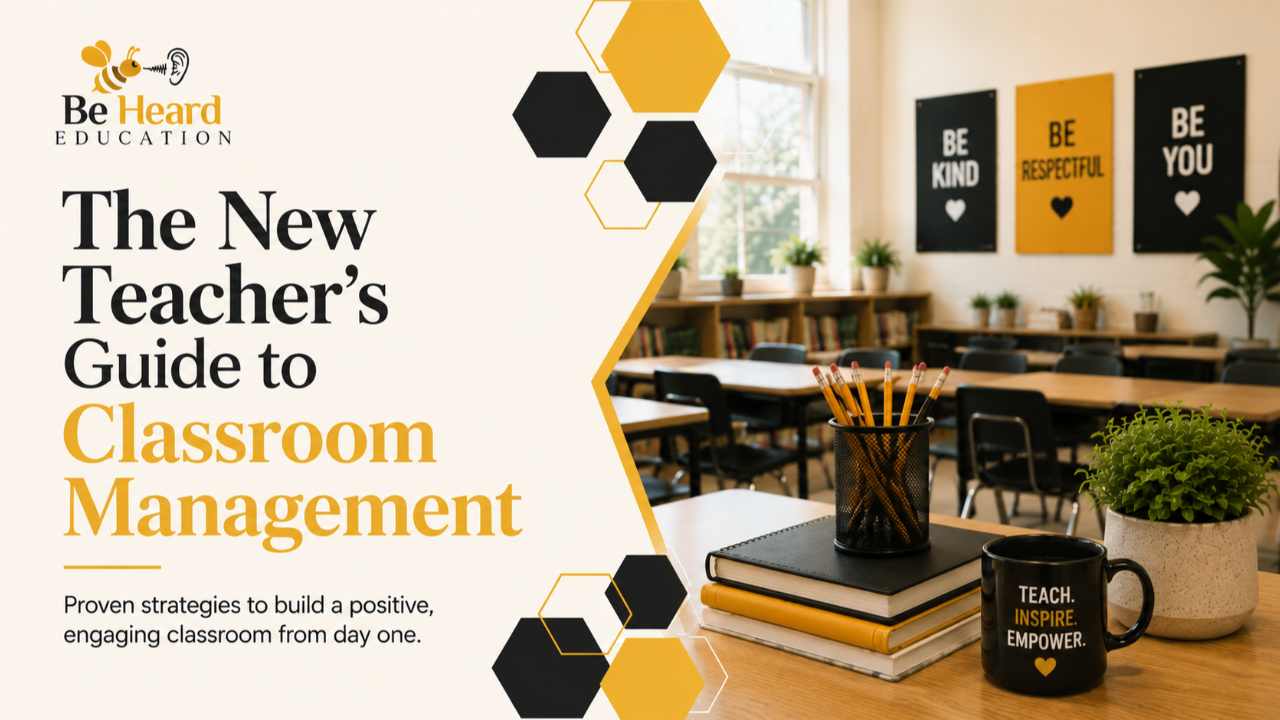
Starting your teaching career can feel overwhelming, especially when you're trying to figure out how to manage a classroom full of energetic students. Classroom management isn't just about keeping kids quiet, it's about creating an environment where everyone can thrive, learn, and feel supported.
That's why we're here to help you unlock the secrets to effective classroom management that will transform your teaching experience. At Be Heard Education, we've spent over two decades coaching teachers and school leaders across the country, and we want to share what actually works.
The Four Pillars of Classroom Success
Physical Environment and Design
Your classroom layout speaks volumes before you even say a word. Consider how students move through your space. Small changes like strategic desk placement and organized supply stations can prevent disruptions before they start.
Clear Rules and Consistent Consequences
Students crave predictability, even if they don't show it. Develop 3–5 clear, positively stated rules. Instead of "Don't talk out of turn," try "Raise your hand to share your thoughts."
Smart Scheduling and Organization
Time is your most precious resource. Start each day with a predictable routine that signals "learning begins now." Consistency helps students transition into learning mode quickly.
Adaptive Instructional Techniques
While you might not control what you teach, you absolutely control how you teach it. Mix up your delivery methods — use small groups, interactive activities, and movement. Engaged students rarely develop behavioral problems.
Proactive vs. Reactive: The Game-Changing Difference
The most effective classroom managers think three steps ahead. We encourage you to focus on prevention rather than reaction. Start each class with an engaging warm-up that immediately captures attention. Provide crystal-clear directions for every activity, including what students should do when they finish early.
Proactive Strategies That Prevent Problems
Recognition is your secret weapon. Implement class-wide rewards, celebrate individual achievements, and send positive notes home. When students feel valued and successful, they naturally want to maintain that positive momentum.
Invest heavily in your first few weeks. Involve students in creating classroom agreements — this gives them ownership and reduces resistance. Be explicit about your expectations for homework, participation, and behavior. When students know exactly what success looks like, they're much more likely to achieve it.
Successful classrooms also run on autopilot for routine activities. Develop consistent procedures for entering the classroom, transitioning between activities, and ending the day. Use specific signals to gain attention, whether it's a hand signal, a bell, or a verbal cue, and stick with the choice consistently.
Reactive Responses That Redirect Without Disruption
Even with the best proactive strategies, disruptions will happen, and that's completely normal. The key is responding calmly and consistently. For minor issues, try proximity or quiet redirection. For more significant disruptions, speak privately with the student or offer choices to help them regain control.
Remember: your response teaches everyone in the room what's acceptable. Stay calm, follow through on consequences, and always circle back to learning as quickly as possible.
"Consistency doesn't mean being rigid - it means being reliable. Students should never wonder whether you'll enforce a rule or follow through on a consequence."
Practical Do's and Don'ts for Success
What To Do
- Establish meaningful rules. Create 3–5 clear, positive rules that reflect your teaching philosophy. Involve students; they're more likely to follow rules they helped create.
- Stay flexible and reflective. Be willing to adjust your approach when something isn't working. Teaching is about constant growth and adaptation.
- Build relationships first. Students need to trust you before they'll respect your management systems.
What To Avoid
- Don't create too many rules. A long list of restrictions feels overwhelming and is harder to enforce consistently.
- Don't skip explaining your "why." Students deserve to understand the reasoning behind your expectations. When they see the purpose, they're more likely to cooperate.
- Don't take behavioral challenges personally. Sometimes students act out because of factors completely outside your control. Stay professional and focus on helping them learn better choices.
Building Your Confidence as a Classroom Leader
Confidence comes with experience, but you can accelerate your growth by being intentional about your development. Observe experienced teachers, ask for feedback, and don't be afraid to admit when something isn't working.
Remember that having strong classroom management doesn't mean sacrificing fun or creativity. In fact, well-managed classrooms are often the most engaging because students feel safe taking risks, asking questions, and truly participating in learning.
Creating a Community of Learners
Your ultimate goal isn't compliance, it's creating a community where everyone feels valued and supported. When students see your classroom as a safe space to learn, make mistakes, and grow, behavioral issues naturally decrease.
We believe every new teacher has the potential to create this kind of environment. It takes practice, patience, and persistence, but the results are transformative, for both you and your students. Classroom management isn't something you perfect overnight, and that's okay. Start with one or two strategies, implement them consistently, and build from there.
Your students need you to be confident, caring, and consistent. They're counting on you to create the structured, supportive environment where they can achieve their potential. We know you're up for the challenge.
Ready to transform your classroom management approach?
Visit Be Heard Education to discover more resources, training opportunities, and support designed specifically for educators like you. Together, we can create classrooms where every student thrives.